
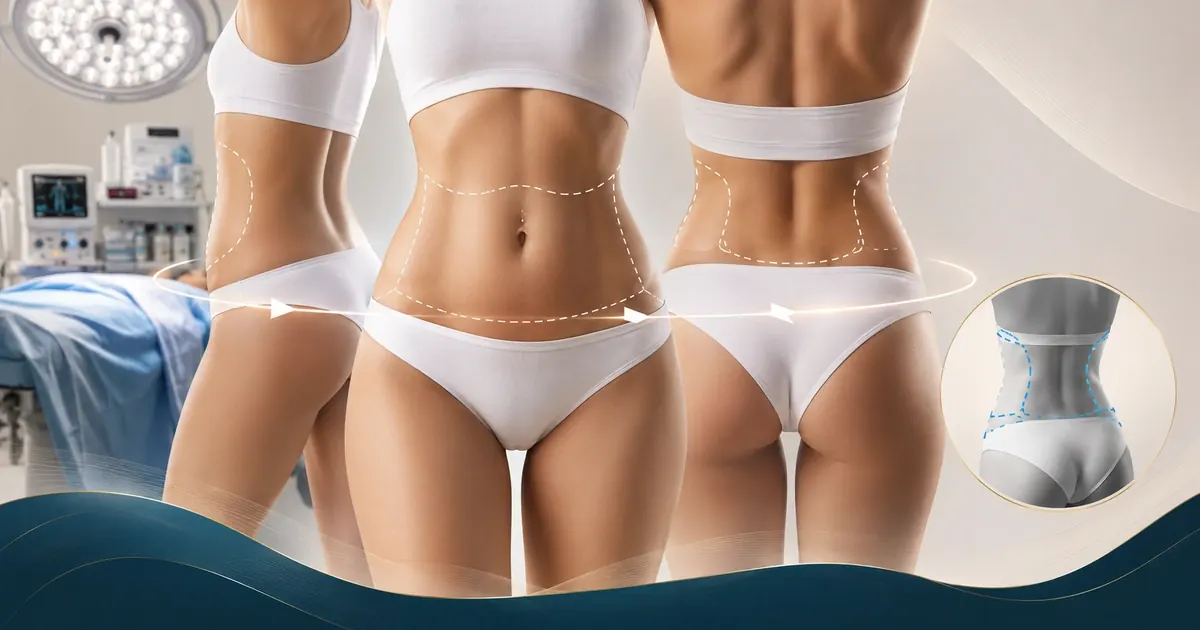
What Is Lipo 360?
Lipo 360 — formally known as circumferential liposuction or 360-degree body contouring — is a comprehensive liposuction procedure that treats the entire midsection in a single surgical session. Unlike standard abdominal liposuction that addresses only the front of the torso, Lipo 360 removes fat from the upper abdomen, lower abdomen, flanks (love handles), and lower back to create seamless, proportional contouring visible from every angle.
The concept behind 360 body contouring is that treating the torso circumferentially produces far superior aesthetic results than isolated area treatment. When only the front abdomen is treated, patients often develop an unnatural appearance — flat from the front but still bulging from the sides and back. A review of 1,000 consecutive abdominoplasty-with-liposuction cases demonstrated high patient satisfaction when the abdomen was treated comprehensively as part of a circumferential approach.1
Lipo 360 has become one of the most sought-after body contouring procedures worldwide, with search volumes exceeding 35,000 monthly queries. Its popularity stems from the dramatic "waist snatching" results it delivers — transforming the entire midsection from a cylindrical or rectangular shape into an hourglass or V-taper silhouette in a single operation. For our complete flagship guide to this procedure, see the dedicated Lipo 360 page. You can also browse other treatment zones to see how 360 compares to single-area contouring.
Origin and Evolution
Circumferential body contouring evolved from observations in the late 1990s and early 2000s that isolated liposuction often produced proportional imbalances. Rohrich and colleagues published early work on circumferential abdominal liposuction, establishing protocols for safely treating the entire torso in one session.3 Since then, advances in tumescent anesthesia, energy-assisted devices, and refined patient selection have made Lipo 360 both safer and more predictable, leading to its current status as a mainstream body contouring procedure.
Who Gets Lipo 360?
Lipo 360 appeals to a broad demographic. Common patient profiles include women seeking an hourglass waist after pregnancy, men wanting a V-taper physique, patients who have lost weight but retain stubborn midsection fat, and individuals preparing for BBL (Brazilian Butt Lift) who need fat harvested from the torso. The procedure is equally effective across genders, though the aesthetic goals typically differ — women generally seek waist narrowing while men often want abdominal definition and elimination of love handles.
Areas Treated & Anatomy
Lipo 360 treats multiple distinct anatomical zones that together comprise the full circumference of the midsection. Understanding each zone helps patients communicate their goals and understand what comprehensive treatment involves.
The Six Core Zones
The standard Lipo 360 treatment encompasses six anatomical zones: (1) upper abdomen — from the ribcage to the umbilicus, (2) lower abdomen — from the umbilicus to the pubic bone, (3) right flank — the side area between the ribcage and hip, (4) left flank — mirror of the right side, (5) lower back — the lumbar area adjacent to the flanks, and (6) upper back/bra roll — the area beneath the scapulae where tissue rolls form. Some surgeons include the upper back as a separate add-on rather than a standard inclusion.
| Zone | Anatomical Location | Typical Volume Removed | Common Concerns |
|---|---|---|---|
| Upper abdomen | Ribcage to umbilicus | 400–1,000 mL | Upper belly pooch, rib coverage |
| Lower abdomen | Umbilicus to pubic bone | 500–1,500 mL | Lower belly pooch, FUPA |
| Flanks (bilateral) | Waistline, iliac crest area | 400–1,000 mL per side | Love handles, muffin top |
| Lower back | Lumbar region | 300–800 mL | Back rolls, waistband bulge |
| Bra roll (optional) | Sub-scapular area | 200–500 mL | Tissue rolls under bra band |
Flanks and Love Handles: The Key to Waist Definition
The flanks — commonly called love handles — are perhaps the most critical component of Lipo 360 results. Fat deposits in the flanks obscure the natural waist-to-hip ratio and create a straight or boxy silhouette. Even patients with relatively flat abdomens may appear thick-waisted due to flank fullness. Removing flank fat reveals the underlying waist indentation, creating the "snatched waist" effect that drives much of Lipo 360's popularity.
Flank fat is often among the most resistant to diet and exercise, with many patients reporting that their love handles are the last area to respond to weight loss efforts. The flanks also tend to contain denser, more fibrous fat than the anterior abdomen, which can make treatment slightly more challenging but also means the skin in this area typically retracts well due to strong fascial attachments.
The Importance of Back Treatment
Including the lower back and potentially the bra roll area in Lipo 360 prevents the "shelf" effect that occurs when only anterior and lateral areas are treated. Back rolls above the waistband are a common frustration, particularly visible in fitted clothing and swimwear. Treating the back creates smooth, continuous contours that look natural from all angles — a hallmark of well-executed 360 body contouring versus piecemeal approach.
Lipo 360 vs. Standard Abdominal Liposuction
Understanding how Lipo 360 differs from standard abdominal liposuction helps patients determine which approach aligns with their goals and anatomy. While both procedures use the same fundamental techniques, the scope, planning philosophy, and aesthetic objectives differ significantly.
Philosophical Difference
Standard abdominal liposuction treats isolated fat deposits — typically the lower belly or love handles as separate "spot treatments." Lipo 360 takes a holistic approach, viewing the torso as a single aesthetic unit that must be balanced circumferentially. The 360 philosophy recognizes that the human eye perceives body shape in three dimensions, and contours that look good from the front must also appear harmonious from the side and back views.
| Feature | Standard Abdominal Lipo | Lipo 360 |
|---|---|---|
| Areas treated | 1–2 zones (e.g., lower belly, or belly + flanks) | 5–6 zones (full circumference) |
| Total volume removed | 1,000–3,000 mL | 3,000–5,000 mL |
| Procedure time | 1–2 hours | 3–5 hours |
| Anesthesia | Local + sedation or general | General (required for repositioning) |
| Patient repositioning | Usually not needed | Supine → prone (or lateral decubitus) |
| Recovery time (desk work) | 5–7 days | 7–10 days |
| Cost (US average) | $3,500–$7,500 | $6,000–$15,000 |
| Proportional result | May create imbalance with untreated areas | Harmonious 360° contour |
| Waist-to-hip ratio change | Moderate improvement | Dramatic improvement |
When Standard Lipo Is Sufficient
Not every patient needs full circumferential treatment. Standard abdominal liposuction is appropriate for patients with localized fat in only one or two zones (e.g., only lower belly without flank concerns), those with budget constraints who prefer to address the most bothersome area first, and patients with minimal posterior fat who already have a defined waist from behind. These patients can achieve satisfying results with targeted treatment and may consider expanding to 360 in a future session if desired.
Why 360 Produces Superior Results
The circumferential approach delivers superior outcomes because it addresses the body as a cohesive unit. A review of 631 consecutive large-volume liposuction cases over 12 years confirmed that circumferential treatment produces consistently high satisfaction with an established safety profile.2 The improvement stems from the balanced proportions visible from all angles, particularly in clothing where waist definition is most apparent.
Candidacy & Assessment
Candidacy for Lipo 360 follows similar principles to standard liposuction but with additional considerations related to the larger treatment scope, longer procedure time, and greater physiological demands. Thorough assessment ensures patient safety and sets appropriate expectations for this more comprehensive body contouring procedure.
Ideal Candidate Profile
The ideal Lipo 360 candidate is within 20–30% of ideal body weight with good overall health, adequate skin elasticity throughout the midsection, circumferential fat deposits (not limited to one area), weight stability for 6+ months, non-smoker status, and realistic expectations about the transformation. Patients should understand that while Lipo 360 produces dramatic improvements, it is a contouring procedure — not a weight loss surgery — and works best on patients who are already near their goal weight.
Safety Considerations for Large-Volume Removal
Because Lipo 360 involves larger aspirate volumes (3,000–5,000 mL), additional safety measures are required compared to single-area procedures. These include pre-operative hemoglobin and hematocrit assessment, intraoperative IV fluid management calibrated to aspirate volume, continuous monitoring of vital signs and body temperature, potential overnight observation for volumes approaching 5,000 mL, and availability of blood products in rare emergency scenarios. The large-volume circumferential study by Rohrich established that volumes up to 5,000 mL are safe when proper protocols are followed in accredited facilities.3
BMI and Weight Requirements
While BMI under 30 is ideal, patients with BMI 30–35 can still be good candidates if their excess weight is distributed primarily as subcutaneous fat in the treatment areas. Patients with BMI over 35 are generally advised to lose weight before pursuing Lipo 360 — both for safety reasons (larger volumes would be needed, exceeding safe limits) and for results (visceral fat component increases with higher BMI, limiting the aesthetic benefit of subcutaneous fat removal). Most surgeons set a firm BMI cutoff between 32 and 35.
Procedure & Techniques
Lipo 360 is a more complex operation than single-area liposuction due to its scope, the volume of fat addressed, and the need for patient repositioning during surgery. The procedure requires meticulous planning, experienced surgical teams, and adherence to safety protocols established through decades of large-volume liposuction research.
Surgical Planning
Pre-operative marking is performed with the patient standing and encompasses the entire torso circumference. The surgeon marks zones of maximum fat concentration, areas requiring feathering (transition zones), and areas to preserve (such as the gluteal shelf in female patients). This circumferential "blueprint" guides the entire procedure and is considered one of the most critical steps — poor planning leads to asymmetry or proportional imbalances that are difficult to correct.
Anesthesia and Positioning
Lipo 360 universally requires general anesthesia because the patient must be repositioned during the procedure. The typical sequence begins with the patient supine (face up) for anterior abdomen treatment, followed by repositioning to prone (face down) or lateral decubitus (on their side) for flank and back treatment. Some surgeons use a "roll" technique where the patient remains on one padded surface and is carefully rotated. The anesthesia team manages airway security during position changes.
Circumferential Technique
The surgical technique follows a systematic approach. Tumescent solution is infiltrated into all treatment zones (anterior first, then posterior after repositioning). Access incisions are placed strategically — typically 6–10 small ports distributed around the circumference. The surgeon works zone by zone, using a criss-cross cannula pattern within each area and feathering between zones to create smooth transitions. Constant assessment of thickness ensures even reduction. Total aspirate from all zones is tracked in real-time to stay within safe volume limits.
A study of large-volume circumferential liposuction established that the superwet technique (infiltration ratio of 1:1) combined with PAL or VASER cannulas achieves optimal fat extraction with minimal blood loss — typically under 3% of aspirate volume.2 This low blood loss is critical for patient safety when removing 3–5 liters of tissue.
Combining Lipo 360 with BBL
Lipo 360 is frequently combined with Brazilian Butt Lift (fat transfer to buttocks). In this combination, the fat harvested from the 360 zones is processed and purified, then strategically injected into the buttocks and hips for augmentation. This "sculpt and transfer" approach achieves a dramatic body reshaping — slimming the waist while enhancing the buttocks — in a single operation. When combined with BBL, the total procedure time increases to 4–6 hours, and specific post-operative positioning requirements apply (avoiding direct sitting for 2–3 weeks).
| Specification | Lipo 360 Alone | Lipo 360 + BBL | Lipo 360 + Tummy Tuck |
|---|---|---|---|
| Procedure time | 3–5 hours | 4–6 hours | 5–7 hours |
| Anesthesia | General | General | General |
| Total aspirate | 3,000–5,000 mL | 3,000–5,000 mL (portion transferred) | 2,000–4,000 mL + skin excision |
| Overnight stay | Usually not required | Recommended | Required (1–2 nights) |
| Recovery (desk work) | 7–10 days | 10–14 days | 14–21 days |
| Cost (US) | $6,000–$15,000 | $10,000–$20,000 | $12,000–$22,000 |
Results & Expectations
Lipo 360 delivers among the most dramatic transformations in body contouring surgery. The comprehensive nature of the procedure — treating front, sides, and back simultaneously — produces a complete silhouette change visible from every angle. However, results unfold over several months, and understanding the timeline is essential for patient satisfaction.
Timeline of Visible Results
Due to the larger treatment area and volume involved, Lipo 360 results take slightly longer to fully manifest compared to single-area procedures. Immediately post-op, significant swelling obscures results. At week 2, approximately 30–40% of swelling resolves and the general contour change becomes apparent. At 6 weeks, 60–70% of the result is visible. Between months 3 and 6, final results emerge as residual edema clears and skin completes retraction. Some patients continue to see subtle improvements up to 12 months as deep tissue remodeling occurs.
Typical Outcomes
Patients undergoing Lipo 360 typically experience a waist circumference reduction of 8–18 cm (3–7 inches), a dramatic improvement in waist-to-hip ratio, visible definition of the natural waist indentation, elimination of love handles and back rolls, and a smoother overall silhouette in clothing. Large-volume liposuction series consistently report high patient satisfaction and safe outcomes when performed at accredited facilities.2
Managing Expectations
While Lipo 360 produces impressive results, patients should understand its limitations. It does not tighten skin (though skin often retracts well in good candidates), repair separated muscles, eliminate visceral fat, or create muscular definition that doesn't exist beneath the fat layer. Patients expecting a "six-pack" need adequate underlying muscle development — Lipo 360 reveals existing muscle contours but cannot create them. Setting realistic expectations is the strongest predictor of post-operative satisfaction.
Recovery & Aftercare
Recovery from Lipo 360 is more involved than single-area liposuction due to the larger treatment scope, greater fluid shifts, and circumferential swelling. Proper aftercare including compression, activity modification, and lymphatic support significantly impacts both comfort during recovery and quality of final results. Patients should plan for 7–10 days away from work and 6–8 weeks before returning to full activity.
Week-by-Week Recovery Timeline
Days 1–3: Significant swelling, discomfort, and fluid drainage from all incision sites. The midsection feels tight and heavy. Movement is restricted — most patients walk with a slight forward lean. Pain managed with prescribed medications. Compression garment worn 24/7 (a full-torso garment covering from below the chest to mid-thigh). Walking gently every 2 hours is essential for circulation and blood clot prevention.
Days 4–7: Swelling peaks between days 3–5 then begins gradual improvement. Fluid drainage decreases. Bruising is extensive — covering the entire midsection — but transitioning from dark purple to lighter colors. Most patients can manage light household tasks. Continue strict compression wear around the clock.
Weeks 2–3: Meaningful swelling reduction. Patients begin to see the general shape change. Return to desk work for most patients (day 7–10). Bruising fades substantially. Lymphatic drainage massage sessions begin (highly recommended for 360 patients due to extensive treatment area). Compression transitions from Stage 1 (maximum compression) to Stage 2 (moderate compression) at surgeon discretion.
Weeks 4–6: Most visible swelling resolved. The contour change is clearly apparent. Light cardio exercise resumes (walking, gentle cycling). No twisting, crunching, or heavy lifting. Compression garment worn at least 12 hours daily (most patients choose nighttime wear). Energy levels return to near-normal.
Weeks 6–8: Return to full exercise including core work and weight training. Final compression wear guidelines provided by surgeon. Results continue to refine as residual edema clears and skin remodeling progresses.
Months 3–6: Final results emerge. Skin continues to tighten and adapt. Compare before-and-after photos at this stage for accurate outcome assessment. See our comprehensive recovery timeline for additional details.
Compression Garments for 360
Lipo 360 requires a full-torso compression garment that covers the entire treatment area — typically a bodysuit or combined abdominal binder with back panel. Unlike single-area garments, the 360 compression must provide uniform pressure circumferentially. Most patients use two garments (alternating for washing) and may transition between compression stages as swelling resolves. Medical-grade garments with 20–30 mmHg compression and adjustable closures accommodate the changing body size during recovery.
Lymphatic Drainage for 360 Patients
Manual lymphatic drainage (MLD) massage is particularly beneficial for Lipo 360 patients due to the extensive treatment area. The circumferential disruption of superficial lymphatic channels means fluid has fewer drainage pathways available, often resulting in more pronounced and longer-lasting swelling compared to focused procedures. A course of 8–12 MLD sessions over 4–6 weeks can reduce swelling duration by up to 4 weeks and significantly improve patient comfort. Sessions should begin 5–7 days post-operatively once incisions are sealed.
Special Considerations
Sleeping position requires attention after Lipo 360. Many patients find sleeping on their back with pillows propped under the knees most comfortable initially. Side-sleeping can be resumed once the flank areas are less tender (typically week 2–3). If Lipo 360 is combined with BBL, specific positioning requirements apply — patients must avoid direct sitting for 2–3 weeks and use a BBL pillow for 6–8 weeks to protect transferred fat cell survival.
Cost & Financing
Lipo 360 represents a larger investment than single-area liposuction due to the extended procedure time, larger facility requirements, longer anesthesia duration, and surgeon expertise required for comprehensive circumferential contouring. Our Lipo 360 cost breakdown covers US, UK, and Turkey pricing in detail. However, treating all zones in one session is significantly more cost-effective than addressing them individually in separate operations.
US Cost Breakdown
In the United States, Lipo 360 typically costs between $6,000 and $15,000 depending on surgeon experience, geographic location, facility type, and specific technique used. The total includes: surgeon's fee ($4,000–$9,000), anesthesia ($1,500–$3,000 for 3–5 hours of general anesthesia), operating facility fee ($1,500–$3,000), compression garments ($200–$500 for full-torso), and pre/post-operative care. Premium pricing in cities like Miami, Los Angeles, and New York often pushes totals above $12,000.
| Location | Lipo 360 Alone | Lipo 360 + BBL | What's Included |
|---|---|---|---|
| US National Average | $8,000–$11,000 | $10,000–$15,000 | Surgery, anesthesia, facility |
| US Premium (Miami/LA/NYC) | $10,000–$15,000 | $13,000–$20,000 | Same + surgeon premium |
| United Kingdom | £6,000–£10,000 | £8,000–£14,000 | Surgery, facility, garments |
| Turkey (all-inclusive) | $4,000–$5,500 | $5,500–$7,500 | Surgery, hotel, transfers, garments, aftercare, medications |
| Mexico | $3,500–$6,000 | $5,000–$8,000 | Surgery, facility (travel separate) |
Cost Savings vs. Individual Treatments
Treating the abdomen, flanks, and back as separate procedures in different sessions would cost approximately $12,000–$20,000 in total (each requiring separate anesthesia, facility, and recovery periods). Lipo 360 combines all zones into one session, saving $3,000–$8,000 compared to the à la carte approach while requiring only one recovery period. This efficiency makes 360 the most cost-effective option for patients who need comprehensive midsection contouring.
Turkey as a Lipo 360 Destination
Turkey has become the world's leading medical tourism destination for Lipo 360, offering JCI-accredited hospitals with board-certified surgeons at 40–65% lower cost than Western countries. All-inclusive packages typically cover: the surgical procedure at an accredited facility, 2–3 night hospital/hotel stay, private airport transfers, compression garments, all medications, post-operative lymphatic massage sessions, and surgeon follow-up appointments. The significant savings allow many patients to afford comprehensive 360 treatment that would be beyond their budget domestically.
Financing Options
Given the higher investment required for Lipo 360 compared to single-area procedures, financing is frequently utilized. Options include medical credit cards (CareCredit, Prosper Healthcare Lending) with 0% promotional APR periods of 12–24 months, personal loans from credit unions, clinic-based installment plans, and savings strategies like Health Savings Accounts. Some international clinics offer payment plans with a deposit securing the surgical date and the balance due before the procedure.
Frequently Asked Questions
Lipo 360 (circumferential liposuction) treats the entire midsection in one session: upper abdomen, lower abdomen, flanks (love handles), and lower back. Some surgeons also include the mid-back and bra roll areas as standard. The goal is seamless 360-degree contouring rather than treating isolated pockets. For full details, see our comprehensive Lipo 360 guide.
Lipo 360 costs between $6,000 and $15,000 in the United States depending on the surgeon, geographic location, and whether additional areas or procedures are included. The national average is $8,000–$11,000. In Turkey, all-inclusive Lipo 360 packages (surgery, hotel, transfers, garments, aftercare) range from $4,000 to $5,500. See our cost guide for details.
Regular liposuction typically treats one or two isolated areas (like the lower belly or love handles alone). Lipo 360 treats the entire circumference of the torso in one session for harmonious, proportional results. The comprehensive approach prevents the unnatural appearance that can occur when only the front is treated but the sides and back still have excess fat.
Recovery from Lipo 360 takes 7–10 days before returning to desk work. A full-torso compression garment is worn for 6–8 weeks. Swelling is more significant than single-area lipo due to the larger treatment zone and peaks at days 3–5. Final results appear at 4–6 months. Full exercise including core work resumes at 6–8 weeks post-operatively. See our recovery timeline for details.
Lipo 360 typically removes 3,000–5,000 mL (3–5 liters) of fat from the combined treatment areas. This translates to an average waist circumference reduction of 8–18 cm (3–7 inches). The safe maximum for a single session is generally 5,000 mL total aspirate. Patients requiring more volume removal may undergo staged procedures 3–6 months apart for safety.
Yes, Lipo 360 is commonly combined with Brazilian Butt Lift (BBL). The fat harvested from the midsection is purified and injected into the buttocks for augmentation. This combination achieves dramatic body reshaping — slimming the waist while enhancing the buttocks — in a single surgical session. The combined procedure costs $10,000–$20,000 in the US or $5,500–$7,500 in Turkey as an all-inclusive package.