
Safety Overview
Safety is the most important consideration in any surgical decision. Liposuction is one of the most commonly performed cosmetic procedures worldwide, with decades of safety data. The tumescent technique — now standard — dramatically reduced complication rates when it was introduced in the 1980s by minimising blood loss and eliminating the need for general anaesthesia in many cases.
That said, liposuction is real surgery. Risks increase with the volume of fat removed, the number of areas treated in one session, and the patient's overall health status. The table below summarises the most commonly reported complications and their frequency.
| Risk / Complication | Frequency | Severity | Resolution |
|---|---|---|---|
| Swelling & bruising | ~100% | Mild | Resolves 2–6 weeks |
| Contour irregularities | 5–15% | Moderate | Most resolve; revision possible |
| Seroma (fluid collection) | 1–5% | Moderate | Drained in office |
| Infection | <1% | Moderate–Serious | Antibiotics; rarely surgical |
| Nerve damage (numbness) | 1–3% | Mild–Moderate | Usually temporary (weeks–months) |
| DVT / PE | <0.1% | Serious | Emergency treatment |
| Fat embolism | <0.05% | Life-threatening | Emergency treatment |
Safety Guides
Explore each safety topic in depth:

Is Liposuction Safe?
Complication rates from peer-reviewed studies, what influences safety outcomes, and how to minimise risk.
Read guide →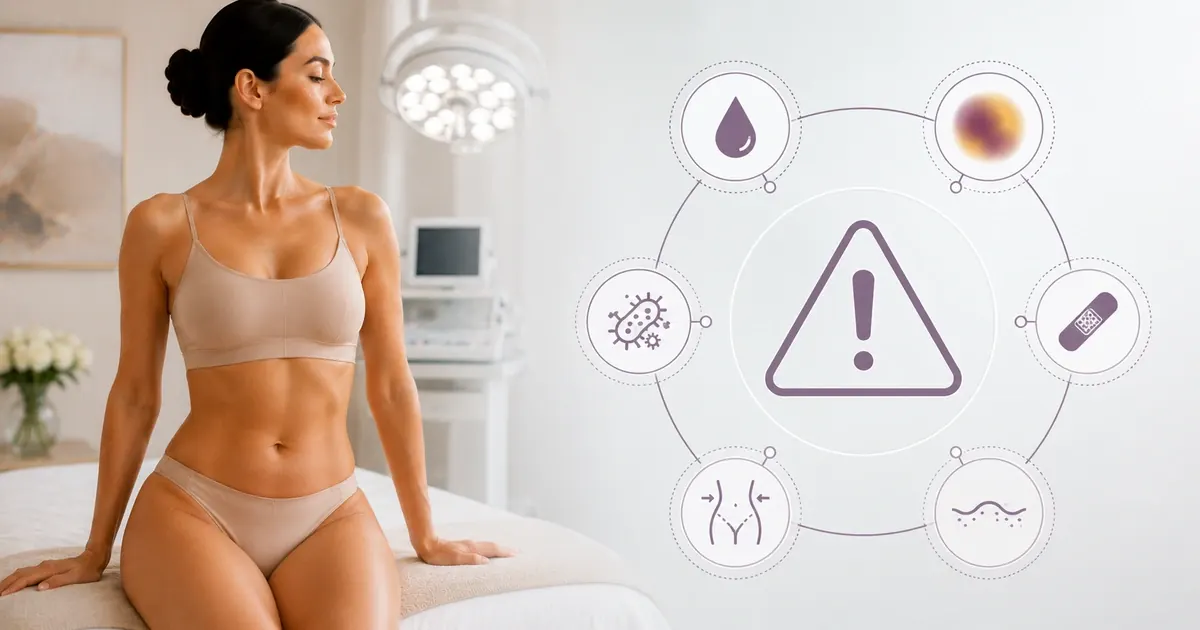
Risks & Side Effects
Common and rare complications — contour irregularities, seroma, infection, nerve damage, and when to seek help.
Read guide →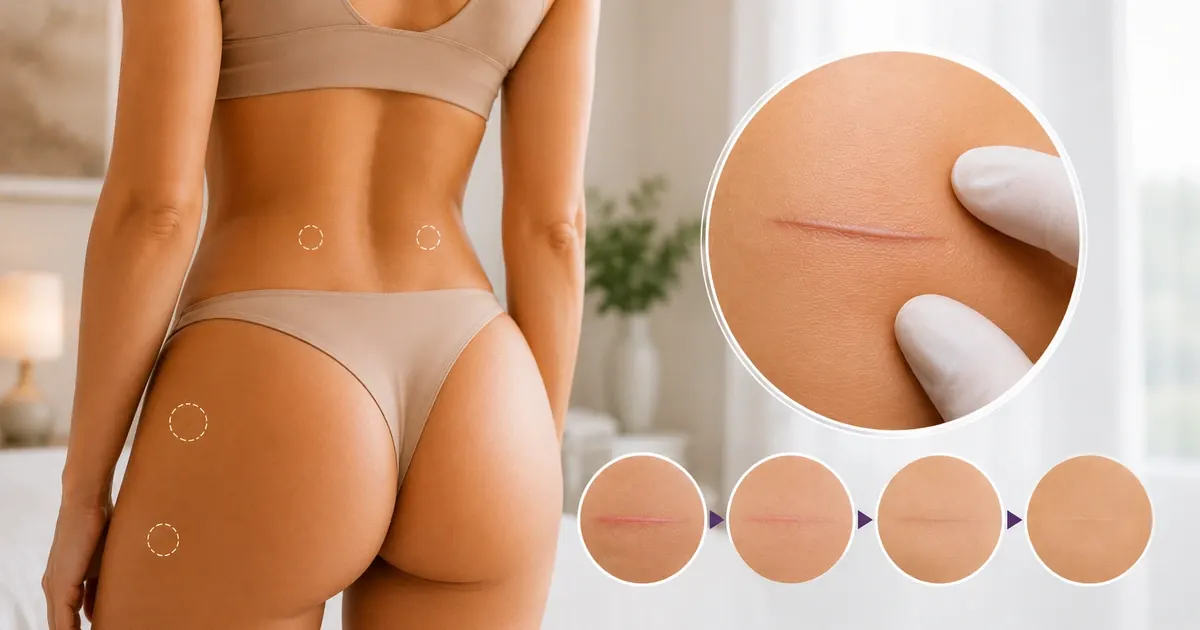
Liposuction Scars
Incision size, typical scar appearance at 3–12 months, placement strategies, and scar-minimisation aftercare.
Read guide →
Am I a Good Candidate?
BMI guidelines, skin elasticity assessment, medical contraindications, and realistic expectations for results.
Read guide →How to Minimise Risk
While no surgery is risk-free, you can significantly reduce your complication risk by following these evidence-backed principles:
- Choose a board-certified plastic surgeon — certification by ABPS (US), FRCS(Plast) (UK), or equivalent ensures proper training in body contouring.
- Have surgery in an accredited facility — AAAASF, JCAHO, or hospital-based operating rooms have the highest safety standards.
- Stay within safe volume limits — removing more than 5 litres of fat in a single session increases complication rates significantly.
- Disclose your full medical history — bleeding disorders, medications (especially blood thinners), and prior surgeries all affect safety planning.
- Follow post-operative instructions — compression garments, activity restrictions, and follow-up appointments are critical for safe healing.
- Avoid combining too many procedures — longer anaesthesia time increases risk; discuss staging if you want multiple procedures.