
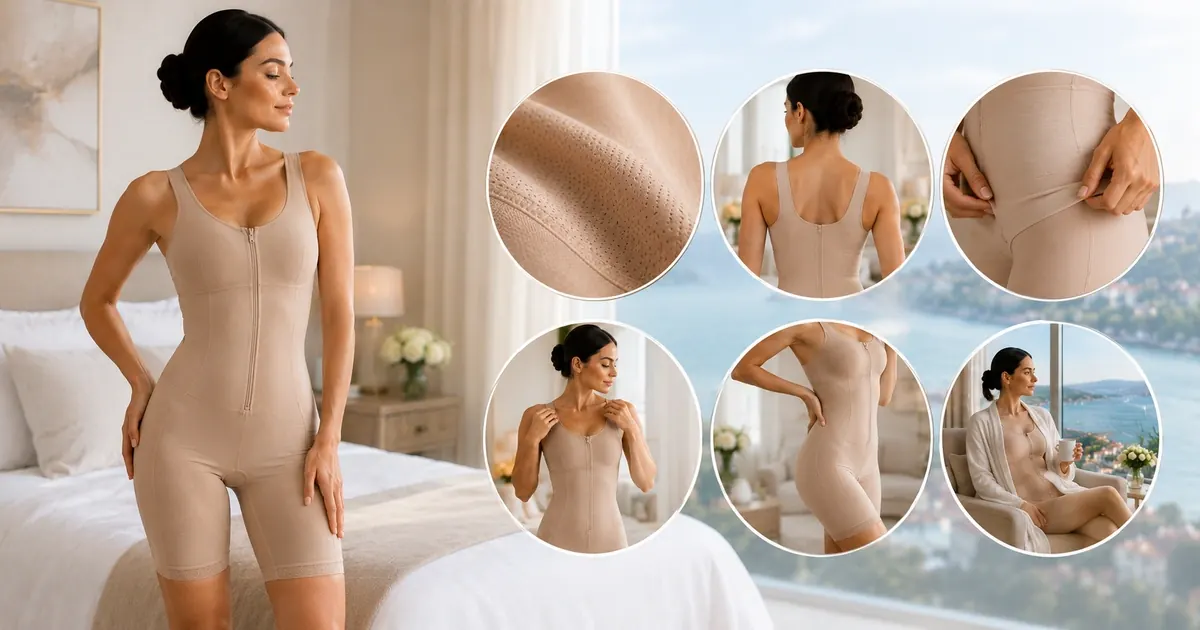
Why Compression Matters After Liposuction
Liposuction removes fat cells from beneath the skin, creating a space (often called "dead space") between the skin and the deeper tissues. Without external compression, this space fills with fluid — serum, lymphatic fluid, and blood — which causes prolonged swelling, increases the risk of seroma formation, and triggers fibrosis as the body's healing response attempts to organise the accumulated fluid.
A clinical study on tumescent liposuction and post-operative garment use confirmed that compression garments significantly improve comfort, reduce post-operative swelling, and accelerate the resolution of bruising.1 This guide is one of several in our recovery resource centre — see the full collection for swelling, fibrosis, and week-by-week timelines. Compression achieves this through several mechanisms:
Reducing Dead Space and Fluid Accumulation
By applying even pressure across the treated area, the garment pushes the skin closer to the underlying tissue, minimising the void where fluid would otherwise collect. This reduces the volume of post-surgical oedema and lowers the risk of seroma — a pocket of clear fluid that may require needle aspiration if it forms.
Supporting Skin Retraction
After fat removal, the overlying skin must retract to conform to the new contour. Compression holds the skin in contact with the underlying tissue during the critical first weeks of healing, encouraging adhesion and reducing the likelihood of skin laxity or irregularity. Patients with moderate skin elasticity benefit most from consistent compression during this window.
Minimising Bruising and Swelling Duration
External pressure limits capillary leakage and lymphatic congestion, both of which contribute to visible bruising and the swollen, heavy feeling patients experience during early recovery. Evidence from the tumescent liposuction literature confirms that patients wearing well-fitted garments consistently report faster bruising resolution and earlier swelling improvement.1
Reducing Fibrosis Risk
Fibrosis — the formation of firm, lumpy scar tissue under the skin — is driven in part by the presence of protein-rich interstitial fluid that activates fibroblasts (collagen-producing cells). Compression limits this fluid accumulation, directly reducing the stimulus for excess scar tissue formation. Combined with manual lymphatic drainage (MLD), compression is the primary preventive measure against problematic fibrosis.2
| Recovery Factor | Without Compression | With Consistent Compression |
|---|---|---|
| Swelling duration | Prolonged; may persist 4–8 months | Resolves faster; largely settled by 3–6 months |
| Bruising resolution | Slower; bruising may spread further | Faster resolution; less spread |
| Seroma risk | Higher — more dead space for fluid | Significantly reduced |
| Fibrosis severity | Higher risk of firm, lumpy tissue | Reduced fibrosis formation |
| Skin retraction | Less supported; higher laxity risk | Skin held against tissue; better adhesion |
| Contour regularity | Greater risk of unevenness | Smoother, more even contour |
Stage 1 vs Stage 2 Compression Garments
Post-liposuction recovery uses two types of garments in sequence. Understanding the difference — and when to transition — is essential for optimal results.
Stage 1 Garments (Weeks 0–3)
Stage 1 garments are the first garment worn after surgery, typically applied in the operating room while you are still under anaesthesia or sedation. They are designed for the acute post-operative phase when swelling is at its highest and your mobility is limited.
Key characteristics of Stage 1 garments:
- Compression level: 20–30 mmHg — the highest therapeutic range for post-surgical use
- Closures: Front hook-and-eye or zipper closures for easy on/off with limited mobility
- Sizing: Cut slightly larger to accommodate peak post-surgical swelling
- Padding compatibility: Designed to be worn over surgical dressings and absorbent pads for drainage
- Material: Thicker, more structured fabric that maintains compression under fluid load
Stage 2 Garments (Weeks 3–6+)
Stage 2 garments replace the Stage 1 garment once the majority of post-surgical swelling has subsided and fluid drainage has stopped — typically at weeks 2–3, though timing varies by surgeon and procedure scope.
Key characteristics of Stage 2 garments:
- Compression level: 15–20 mmHg — slightly lower as swelling decreases
- Fit: More contoured and body-hugging, conforming to your emerging shape
- Profile: Thinner fabric that sits more discreetly under clothing
- Function: Continues to support skin retraction and reduce residual swelling while allowing greater comfort and mobility
- Duration: Worn from weeks 3–6, transitioning from full-time to part-time
| Feature | Stage 1 | Stage 2 |
|---|---|---|
| Worn during | Weeks 0–3 | Weeks 3–6+ |
| Compression (mmHg) | 20–30 | 15–20 |
| Closures | Front hooks or zip for easy access | Hooks, zip, or pull-on |
| Sizing | Slightly larger for swelling | Fitted to post-swelling contour |
| Fabric thickness | Thicker, more rigid | Thinner, smoother |
| Under clothing | Visible lines; not discreet | Smoother; more discreet |
| Drainage pad compatible | Yes | No (drainage stopped) |
When to Transition from Stage 1 to Stage 2
The transition timing is determined by your surgeon, not by the calendar alone. Indicators that you are ready for Stage 2 include: fluid drainage has stopped completely (usually by week 2), the Stage 1 garment is noticeably loose due to swelling reduction, and your surgeon confirms at a follow-up visit that healing is progressing normally. Do not switch to a Stage 2 garment early without medical guidance — doing so can compromise compression during the most critical healing phase.
How Long to Wear Your Compression Garment
The standard compression timeline for liposuction recovery is 6 weeks. However, the exact duration depends on the procedure scope, the volume of fat removed, the body areas treated, and your individual healing response. The protocol below reflects the most commonly recommended approach across peer-reviewed surgical literature and major professional bodies.
| Phase | Duration | Wear Schedule | Garment Stage |
|---|---|---|---|
| Acute phase | Weeks 1–3 | 24 hours/day (remove only to shower) | Stage 1 |
| Transition phase | Week 3 | Switch to Stage 2 (if surgeon approves) | Stage 1 → Stage 2 |
| Maintenance phase | Weeks 4–6 | 12 hours/day (night + several hours daytime) | Stage 2 |
| Extended (if needed) | Weeks 6–8 | Night-only or as directed | Stage 2 |
| Discontinuation | Week 6–8 | No garment; results continue to improve | None |
Extended Compression for Larger Procedures
Patients who undergo Lipo 360, large-volume liposuction (more than 3–4 litres), or combined procedures (such as liposuction with a tummy tuck) are often prescribed an extended compression protocol of 8 weeks — sometimes longer. The greater tissue disruption in these cases means more dead space, more fluid production, and a longer window during which compression provides meaningful benefit.
What Happens If You Stop Wearing the Garment Too Early
Discontinuing compression prematurely — particularly during the first 3 weeks — can lead to: increased or prolonged swelling, higher risk of seroma formation requiring aspiration, greater fibrosis severity, uneven skin retraction resulting in contour irregularity, and a longer overall recovery period. If the garment becomes uncomfortable or seems ill-fitting, contact your surgeon to adjust sizing rather than simply stopping wear.
Fit, Sizing & How Tight Should It Be
Proper fit is as important as wearing the garment consistently. A garment that is too tight can cause nerve compression, skin breakdown, and circulatory problems. A garment that is too loose fails to provide adequate compression and allows fluid to accumulate.
The One-Finger Rule
A well-fitted compression garment allows you to slide one flat finger between the fabric and your skin with moderate effort. If you cannot get a finger underneath at all, the garment is too tight. If the finger slides in easily or the garment bunches and shifts, it is too loose. This simple test should be checked daily during the first week, as swelling levels fluctuate significantly.
Signs the Garment Is Too Tight
- Numbness, tingling, or "pins and needles" in the treated area or extremities
- Skin colour changes — blue, purple, or white patches — below the garment
- Pain that increases when the garment is on and immediately improves when removed
- Visible pressure marks, indentations, or ridges that persist more than 30 minutes after removal
- Difficulty breathing if wearing an abdominal garment
Signs the Garment Is Too Loose
- The garment rides up, rolls, or shifts position frequently
- Visible gaps or bunching of fabric over treated areas
- Swelling increases when wearing the garment compared to not wearing it (indicating the garment is holding fluid in one area while leaving another unsupported)
- The garment was initially snug but has become loose as swelling decreases — this means it is time to size down or switch to Stage 2
Sizing Considerations
Most garment manufacturers provide sizing charts based on pre-surgical measurements. However, because post-operative swelling significantly changes your measurements, many surgeons recommend being professionally fitted or using the garment size recommended by your surgical team rather than ordering based on your everyday clothing size. When in doubt, consult your surgeon before purchasing a replacement garment.
Garment Types by Body Area
Different body areas require purpose-designed garments to ensure compression is applied evenly across the treated zone. Using the wrong garment type — or a general shapewear garment not designed for post-surgical use — results in uneven pressure, pressure points, and suboptimal recovery.
| Treatment Area | Garment Type | Key Features |
|---|---|---|
| Abdomen | Abdominal binder or full-torso garment | Extends from below chest to hips; front closure; broad coverage over flanks |
| Flanks (love handles) | Full-torso garment or high-waist compression | Must wrap fully around the torso; low-rise garments leave flanks unsupported |
| Thighs (inner/outer) | Compression shorts or full-leg garment | Extends waist to knee or ankle; open crotch for convenience |
| Arms | Compression arm sleeves | Shoulder-to-wrist coverage; may include hand coverage |
| Chin / neck | Chin strap or facial compression wrap | Velcro-adjustable; applies pressure under chin and jawline |
| Lipo 360 | Full-body garment (torso + hips) | 360° circumferential compression; covers abdomen, flanks, and back |
| Back / bra roll | Full-torso garment with back panel | Must extend high enough to cover the treated area near bra line |
Medical-Grade vs Retail Shapewear
Post-surgical compression garments are not the same as retail shapewear or waist trainers. Medical-grade garments provide calibrated, even compression measured in mmHg, are constructed from breathable surgical-grade fabrics, and are designed with closures that accommodate limited post-operative mobility. Retail shapewear products (such as Spanx or similar brands) do not provide consistent compression levels and often create pressure points at seams and edges that can cause skin breakdown over surgical sites. Always use the garment type recommended by your surgeon.
Hygiene & Garment Care
Wearing the same garment 24 hours a day for weeks at a time creates an obvious hygiene challenge. Sweat, surgical drainage fluid, and skin oils accumulate and can irritate incision sites if not managed properly. A consistent cleaning routine is essential — both for your comfort and for the garment's ongoing effectiveness.
Daily Washing Protocol
- Frequency: Wash the garment every day during the acute phase (weeks 1–3). If you have two garments, alternate daily.
- Method: Hand-wash in cool or lukewarm water. Do not use hot water — heat degrades the elastic fibres.
- Detergent: Use a mild, fragrance-free detergent. Avoid fabric softener, bleach, or harsh chemicals.
- Rinsing: Rinse thoroughly until no soap residue remains. Detergent residue can irritate healing skin.
- Drying: Gently squeeze (do not wring or twist). Lay flat or hang to air-dry away from direct heat and sunlight. Never tumble dry.
Why You Need Two Garments
Owning at least two garments of the same type and size is strongly recommended. This allows you to wear one while the other dries, maintaining 24/7 compression without wearing a damp garment against your skin. A damp garment against healing incision sites increases the risk of bacterial growth and skin irritation. Most surgical teams will recommend purchasing two garments before your procedure.
Skin Care Under the Garment
Shower daily once your surgeon permits it (usually 48 hours post-surgery). Pat incision sites dry gently — do not rub. Apply any prescribed topical medications before re-applying the garment. Avoid lotions, oils, or moisturisers on the treated area during the first 2 weeks unless specifically recommended by your surgeon, as these can affect incision healing and garment fit. If you notice any skin breakdown, redness, or rash under the garment, contact your surgeon immediately.
When to Stop Wearing Compression
The decision to discontinue compression should be made in consultation with your surgeon, not unilaterally. However, the following guidelines represent the standard approach in the surgical literature.
Standard Discontinuation at 6 Weeks
For standard liposuction of one or two areas with moderate fat removal, compression is typically discontinued at 6 weeks. By this point, the acute healing phase is complete, the dead space has largely closed, fibrosis is being managed through massage, and skin retraction is well underway. The garment is removed gradually — moving from part-time (weeks 4–6) to nothing — rather than stopping abruptly.
Extended Wear Beyond 6 Weeks
Your surgeon may recommend extended compression (8+ weeks) in the following circumstances: large-volume liposuction (more than 3 litres removed), Lipo 360 or circumferential procedures, combined procedures (liposuction with abdominoplasty), persistent significant swelling at the 6-week mark, or a history of slow healing or excessive scarring. Extended wear is typically night-only and should not be uncomfortable.
Signs You No Longer Need the Garment
Indicators that compression may be safely discontinued: minimal to no visible swelling in the treated area, the garment feels very loose even at the smallest stage (compression is no longer being applied meaningfully), your surgeon confirms at a follow-up visit that healing is progressing well, and you have passed the 6-week post-operative mark. Even after discontinuation, some patients choose to wear the garment during exercise or long days on their feet for additional comfort — this is acceptable but not medically necessary.
Frequently Asked Questions
-
The standard protocol is 6 weeks total: continuous 24-hour wear for the first 3 weeks, then part-time wear (12 hours per day or night-only) for weeks 4–6. Larger procedures such as Lipo 360 may require 8 weeks of compression. Clinical evidence confirms that consistent garment use reduces swelling, bruising, fibrosis risk, and contour irregularity.1
-
Stage 1 (weeks 0–3) provides firm compression at 20–30 mmHg with easy front closures, sized to accommodate post-surgical swelling. Stage 2 (weeks 3–6) offers a more contoured fit at 15–20 mmHg with thinner fabric that sits more discreetly under clothing. The transition is determined by your surgeon based on your swelling resolution and healing progress.
-
The garment should be snug with even pressure across the treated area. The one-finger test: you should be able to slide one flat finger between the garment and your skin. If you experience numbness, tingling, skin colour changes, or pain that worsens when the garment is on, it is too tight. If it rides up or bunches, it is too loose.
-
During weeks 1–3, the garment should be worn 24 hours a day including overnight. Removing it at night allows fluid to accumulate, increasing swelling and fibrosis risk. After week 3, some surgeons permit part-time wear, and many patients transition to night-only wear during weeks 4–6.
-
Hand-wash daily in cool or lukewarm water with a mild, fragrance-free detergent. Squeeze gently without wringing; lay flat or hang to air-dry away from direct heat. Machine washing and tumble drying damage elastic fibres. Having two garments allows you to alternate while one dries.
-
Yes. Compression garments are area-specific to ensure even pressure across the treatment zone. Abdomen uses a full-torso garment, thighs require waist-to-knee/ankle shorts, arms use compression sleeves, and chin lipo requires a chin strap. Lipo 360 uses a full-body 360° garment. Using the wrong type results in uneven compression.