
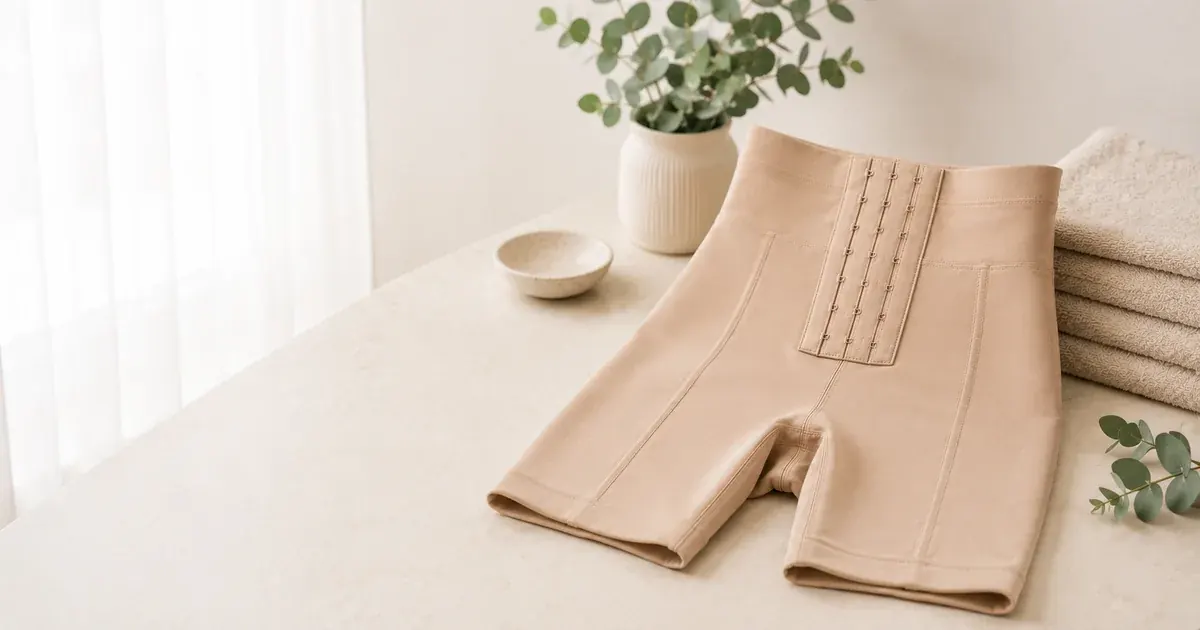
Why Compression Garments Matter After Liposuction
Compression garments are prescribed after almost every liposuction procedure. They are not merely a comfort measure or a precaution — the evidence base for their role in recovery outcomes is clear, and non-compliance consistently correlates with worse results, as research on tumescent liposuction garments demonstrates.1 Understanding what compression actually does in the body helps explain why it is taken so seriously in well-managed post-operative protocols.
Controlling Post-Operative Oedema
When fat is removed during liposuction, a dead space is created between the skin and the deeper tissue layers. The body responds to this — and to the mechanical trauma of cannula passes through tissue — with an acute inflammatory response that causes significant fluid to accumulate in the treated area. This post-operative oedema is normal and expected, but its volume and duration directly affect how quickly swelling resolves and how the final contour looks.
Compression works by applying external pressure that counteracts the hydrostatic forces driving fluid into the interstitial space. It compresses the dead space, reducing the physical volume available for fluid pooling, and simultaneously supports capillary and lymphatic return of fluid back into the systemic circulation. Studies on post-surgical compression consistently demonstrate that patients wearing correctly fitted garments experience significantly less swelling in the first two to four weeks compared with patients without compression, and that their swelling resolves faster.1 This earlier resolution of oedema is not merely cosmetic — it also means less discomfort, reduced pressure on the healing tissue, and earlier return to daily activity.
Skin Retraction to the New Contour
After fat is removed, the skin must contract and adhere to the new underlying tissue contour. This is a biological process — skin retraction relies on the elastin and collagen fibres in the dermis gradually shortening and reorganising as the tissue heals. The process takes months and is strongly influenced by the mechanical environment around the healing tissue.
Compression garments provide the external scaffolding that guides this retraction. By holding the skin in close contact with the new contour from the earliest days of healing, the garment shapes the direction and extent of retraction. A 1995 tumescent liposuction study by Klein identified that compression garment protocols were a key determinant of post-liposuction outcomes — patients with consistent compression developed smoother contours and better skin adhesion than those without.1 This evidence is consistent with the basic wound-healing science: mechanical tension applied to healing tissue influences collagen fibre orientation and the final tissue architecture. Inadequate compression in the critical first weeks of healing — when the tissue is most plastic — can mean the skin does not retract fully to the new shape, leaving residual looseness or irregularity even after swelling has resolved.
Supporting Lymphatic Drainage and Reducing Seroma Risk
Seroma — the accumulation of post-surgical fluid in the dead space — is one of the most common complications after liposuction. It occurs when lymphatic and plasma fluid collects in the void left by removed fat faster than the body can reabsorb it. Seromas typically require aspiration (needle drainage) by the surgeon and, if untreated, become a sustained stimulus for fibrosis.
Compression garments reduce seroma risk through two mechanisms. First, by compressing the dead space, they physically limit the volume available for fluid accumulation. Second, the even external pressure supports lymphatic vessel function: gentle rhythmic compression during movement (walking, breathing) stimulates lymphangion contractions, accelerating lymphatic clearance of accumulated fluid. The reduction in seroma incidence with consistent compression garment use is well established in the post-liposuction clinical outcomes literature.3
Reducing Fibrosis Severity
Post-liposuction fibrosis — the firm lumps and dense tissue that many patients feel in the weeks after surgery — is driven by fibroblast activity in the healing tissue. Fibroblasts are activated by the inflammatory signals generated by accumulated fluid and tissue trauma: the more inflammatory stimulus persists in the treated area, the more fibroblast-driven collagen is deposited. By controlling oedema and lymphatic stasis — the main inflammatory drivers — compression reduces the signal intensity that would otherwise sustain heavy fibrosis formation. Patients who wear their garments consistently typically report softer, more even tissue at the 6-week and 3-month marks compared with those who have gaps in compliance, as published recovery outcome data supports.2
Full guide to post-lipo fibrosis — causes, management, and what's normal →
How Long to Wear Compression After Lipo
The total compression period varies by procedure volume and individual surgeon preference, but most standard protocols divide compression into two stages across a minimum of six weeks. Larger procedures extend this timeline. The stages are not arbitrary — they correspond to the biological phases of wound healing.
Stage 1 (Weeks 1–3): Continuous Wear, Remove Only to Shower
The first three weeks after liposuction are the most critical for compression compliance. During this period, the acute inflammatory phase is active: swelling is at its peak (peaking in the first week and beginning to decline through weeks 2–3), and the body is most actively clearing the fluid that accumulates in the surgical dead space. Any gap in compression during this window allows fluid to pool unchecked, increasing the risk of seroma and enlarging the volume of oedema that must eventually be reabsorbed.
Stage 1 garments are firm — typically rated 23–32 mmHg — and are worn 24 hours per day, 7 days per week. They are removed only to shower (briefly, then replaced immediately), or at the specific direction of your surgeon for wound inspection. Even sleeping in the garment is required during this phase. Many patients find the first few days uncomfortable; this is normal and typically eases as acute post-operative swelling and bruising subside by days 5–10.
Transition to Stage 2 (Weeks 3–6): Lighter Garment, Daytime Focus
Around the 3-week mark — confirmed at a follow-up appointment rather than assumed — the acute oedema phase is winding down and the proliferative healing phase is under way. At this point, most surgeons transition patients to a stage 2 garment: lighter in compression (18–21 mmHg), sometimes softer in construction, and worn during waking hours rather than continuously. Many protocols still recommend wearing the stage 2 garment during sleep in the early part of this phase, transitioning to daytime-only later in weeks 4–6 as the surgeon confirms adequate tissue adherence.
The stage 2 garment continues to support skin retraction and control residual swelling, which can fluctuate throughout this period — particularly in response to activity, heat, or dietary salt. Some patients notice that swelling appears worse on days when they reduce garment wear; this is normal and reinforces the rationale for continued compliance through the full six weeks.
Extended Wear (Months 2–3): As Tolerated, Especially During Activity
Patients who have undergone larger-volume liposuction, Lipo 360, high-definition liposuction, or combined procedures with a BBL or tummy tuck are often advised to continue some level of compression into months 2 and 3. This is typically not continuous wear but targeted use: wearing the stage 2 garment during physical activity, on days when prolonged standing or sitting is expected, or when travelling. The rationale is that activity increases lymphatic load and interstitial fluid movement — compression during these periods reduces swelling fluctuations and maintains tissue support as the final contour consolidates. Most surgeons taper this to complete discontinuation between months 2 and 3, though some patients find they prefer to continue voluntarily for comfort.
Surgeon Variation: Why Protocols Differ
Compression garment protocols vary meaningfully between surgeons, and even between the same surgeon's recommendations for different patients. Factors that influence the protocol include: the volume of fat removed, the number and distribution of treatment areas, the technique used (tumescent, VASER, BodyTite all affect tissue trauma differently), the patient's skin elasticity and baseline tissue quality, and whether a concurrent procedure was performed. Patients who have had liposuction in a country other than their own (e.g., in Turkey or Mexico) may find that the protocol given by the operating surgeon differs from advice they receive from a local GP or follow-up practitioner — in the absence of a clear reason to deviate, follow the operating surgeon's instructions, as they have direct knowledge of the procedure performed. Published activity restriction and outcome research supports this approach.2
| Stage | Garment Type | Wear Duration | Purpose |
|---|---|---|---|
| Stage 1 (Weeks 1–3) |
Firm compression garment, 23–32 mmHg; often surgeon-provided | Continuous — 24 hrs/day, 7 days/week; remove only to shower | Control acute oedema; minimise seroma risk; support dead-space compression; initiate skin retraction |
| Stage 2 (Weeks 3–6) |
Lighter compression, 18–21 mmHg; softer construction | Daytime; some surgeons extend to sleep in early stage 2 | Continue skin retraction; manage residual swelling fluctuations; support lymphatic clearance |
| Extended (Months 2–3) |
Stage 2 garment or lighter support garment | During physical activity, travel, prolonged sitting/standing; otherwise as tolerated | Reduce swelling spikes during activity; maintain tissue support during final contour consolidation |
How Tight Should a Compression Garment Be?
Fit is arguably more important than the garment itself. An expensive medical-grade garment that is too loose provides little benefit; one that is too tight creates its own set of risks. Understanding the target and the warning signs allows patients to self-assess throughout their recovery.
Correct Compression Pressure
Medical-grade compression garments are rated in millimetres of mercury (mmHg) — the same unit used for blood pressure and medical compression stockings. Post-liposuction protocols typically specify:
- Stage 1: 23–32 mmHg — firm enough to substantially compress the treated tissue but not so tight as to compromise circulation
- Stage 2: 18–21 mmHg — noticeable compression but lighter, suitable for all-day wear over several weeks
A correctly fitted garment at these pressures should feel like a firm, consistent squeeze across the treated area. There should be no gaps where the garment balloons away from the skin (indicating it is too large), and no areas where it digs into skin edges, rolls, or creates pressure ridges (indicating it is too small or incorrectly shaped for the body area). When you put it on, it should require some effort to pull it over treated areas — not easy to slip on without resistance, but not so difficult that you cannot manage it yourself.
Signs It Is Too Tight
A garment that is too tight can cause real harm during the recovery period. Contact your surgeon or remove and assess if you notice any of the following:
- Numbness or tingling in the treated area or downstream structures (e.g., numbness in the thighs from an abdominal garment that is too tight across the inguinal crease)
- Skin discolouration — blue, purple, or grey tones indicating impaired venous drainage or arterial compression
- Extreme or increasing pain beyond the normal post-surgical ache — particularly sharp, burning, or pressure-type pain
- Difficulty breathing from an abdominal or thoracic garment compressing the ribcage
- Deep pressure marks or indentations left in the skin after wearing the garment
If you experience any of these, remove the garment, assess the skin, and contact your surgeon's team. Do not simply continue wearing it and hope the sensation resolves.
Signs It Is Too Loose
A garment that is too loose is essentially not functioning as compression. Signs include:
- You can easily slide an entire hand flat under the garment without significant resistance
- The garment bunches or folds, especially at the waist or around the knees of a body suit
- You notice more visible or palpable swelling when wearing the garment than you expected given your stage of recovery
- The garment shifts noticeably during movement rather than tracking with the body
A garment that has stretched significantly through repeated use may have lost its compression effectiveness. Garments do relax over time — a garment that fitted correctly at week 1 may be too loose by week 4 if it has been used continuously without rotation. This is one reason having two garments in rotation matters.
| Check | Too Tight | Correct Fit | Too Loose |
|---|---|---|---|
| Pressure sensation | Sharp, burning, or extreme pain; numbness | Firm, even squeeze — consistent across treated area | Barely noticeable; little resistance to touch |
| Skin appearance | Blue, purple, or grey discolouration; deep indentations | Normal skin tone; no pressure ridges | Skin visible through gaps or bunching fabric |
| Movement under garment | Cannot slide fingers underneath; restricts breathing | Fingers can slip under only with deliberate effort | Whole hand slides under easily; garment shifts with movement |
| Garment behaviour | Rolls at edges; digs in at waist or thigh | Stays in place; flat edges without digging | Bunches, folds, or slides down during wear |
| Action required | Remove immediately; contact surgeon | Continue wearing as prescribed | Size down or replace; measure and re-order |
Custom-Fitted vs Off-the-Shelf
Custom-fitted garments are measured and made to the patient's individual body dimensions. They provide the most accurate compression for unusual body proportions, post-weight-loss skin, very tall or short patients, or those undergoing multiple treatment areas simultaneously. Off-the-shelf garments use standardised sizing (typically XS through 3XL) and work well for patients whose measurements fall within standard ranges. Most surgeons provide an off-the-shelf stage 1 garment for the immediate post-operative period — the body's swelling makes exact sizing impractical anyway — and some recommend transitioning to a custom-fitted stage 2 garment once the acute swelling has settled, typically around week 3. For standard body proportions and typical procedure volumes, a correctly sized off-the-shelf medical-grade garment provides clinically equivalent compression to custom options.
Garment Types by Treatment Area
Not all liposuction procedures use the same garment. The type of compression required is determined by the anatomical area treated and the distribution of the surgery. Using the wrong garment type — for example, a simple abdominal binder after Lipo 360 — leaves untreated areas uncompressed and undermines the protocol.
Abdominal Binders and Full Body Suits (Lipo 360)
Standard abdominal liposuction — limited to the front and sides of the abdomen — is typically managed with a high-waisted abdominal compression binder or body brief that extends from below the bra line to mid-thigh. For Lipo 360 (circumferential liposuction of abdomen, flanks, waist, and lower back), a full circumferential body suit is required. The critical distinction is 360-degree coverage: if the back of the garment simply has an open panel or very loose coverage, it is not providing compression to the posterior treatment areas, creating a risk of asymmetric oedema and uneven skin retraction. Full body suits often extend to mid-thigh or knee and include adjustable closures that can be loosened as swelling reduces over the first weeks.
Compression Vests for Chest (Male Gynecomastia, Back)
Liposuction for male gynecomastia (excess breast tissue) and back/bra-line liposuction requires a compression vest: a sleeveless or sleeved garment that compresses the chest and thoracic back. The vest must cover the entire treated area — for gynecomastia, this means coverage from the lower chest to below the breast tissue with firm compression across the pectoral region. Stage 1 vests are firm and close-fitting. Some designs combine a vest and abdominal binder in a single garment for patients who have had combined chest and abdominal liposuction.
Chin and Neck Band (Submental Liposuction)
Submental liposuction — fat removal under the chin and from the neck — uses a dedicated chin/neck compression band: a wrap-around garment that extends from beneath the chin, around the jaw, and typically over the top of the head. It is worn continuously for the first 2–3 weeks, removed only to wash and eat. The band compresses the treated area where the neck and jaw meet — an anatomically complex area where gravity works against fluid clearance and where the skin must retract upward, against its natural direction. Many patients report the chin band as the most uncomfortable compression garment, primarily due to the restriction of jaw movement and the warmth it creates. Softer stage 2 bands are typically more tolerable.
Arm Sleeves and Thigh Garments
Arm liposuction requires dedicated compression arm sleeves: graduated compression garments (tighter at the wrist, reducing toward the shoulder) that must cover the full length of the treated area without leaving gaps at the edges. Standard abdominal garments do not cover the arms. Thigh liposuction — inner thigh, outer thigh, or combined — uses compression shorts or body suits that extend to mid-thigh or below the knee depending on where the treatment boundary falls. Ensuring the garment edge does not sit directly over a treated area is important: edge compression ridges on healing liposuction tissue can cause pressure injury and uneven contour.
| Treatment Area | Garment Type | Stage 1 Recommendation |
|---|---|---|
| Abdomen (anterior only) | High-waist abdominal binder / body brief to mid-thigh | 23–32 mmHg; full anterior coverage from below bra line; continuous wear |
| Lipo 360 (abdomen + flanks + back) | Full circumferential body suit (360° coverage) | 23–32 mmHg; full circumferential coverage including posterior; no open back panel |
| Male gynecomastia / back / bra-line | Compression vest (sleeveless or sleeved) | Firm vest covering full treatment zone; often includes abdominal extension for combined cases |
| Submental (chin / neck) | Chin/neck compression band (wrap-around, over-crown design) | Worn continuously weeks 1–3; softer band permitted for stage 2; remove to eat and wash |
| Upper arms | Graduated compression arm sleeves | Full arm coverage from wrist to shoulder; graduated compression; worn under clothing |
| Inner / outer thighs | Compression shorts extending below treatment boundary | Garment edge must not cross a treatment area; coverage to mid- or lower thigh |
What Happens If You Stop Wearing It Early
Non-compliance with compression garment protocols is the most common self-inflicted cause of suboptimal liposuction results. The body's healing biology does not pause because a patient finds the garment uncomfortable — it continues without the structural support compression provides, and the consequences accumulate.
Increased Swelling and Prolonged Resolution
Without compression, the hydrostatic forces driving fluid into the surgical dead space operate unopposed. Swelling increases — often noticeably within 24–48 hours of garment removal — and the fluid that accumulates must eventually be reabsorbed by the lymphatic system. In the absence of compression, this reabsorption is slower: lymphatic clearance is less efficient, swelling persists for longer, and patients may still have significant oedema at 3–4 months when they would otherwise have been largely resolved. Prolonged swelling also means a longer period before the final contour becomes visible, which is distressing for patients eager to see their results, as liposuction outcome research documents.2
Reduced Skin Retraction to New Contour
This is the consequence most likely to affect the visible final result. Skin retraction after liposuction depends on the skin being held in close contact with the new tissue contour during the early weeks of healing — the period when the collagen and elastin network is reorganising. If the skin is allowed to remain elevated from the contour (unsupported by compression, propped up by accumulated fluid), the retraction process occurs in the "wrong" configuration. The collagen fibres that form during remodelling are laid down in the geometry available — if that geometry is "skin loose from contour," the retraction that eventually occurs is less complete. The result can be persistent residual looseness or less definition in the final outcome than the procedure volume would otherwise support. This effect is most pronounced in patients with moderate skin laxity to begin with — precisely the patients who most need compression to compensate.
Higher Seroma Risk
Without compression collapsing the dead space, post-surgical fluid has a larger volume to accumulate in before triggering the symptoms (fullness, fluctuance, visible swelling) that prompt a patient to contact their surgeon. Seromas that are caught early — when small — are easy to aspirate in a brief office procedure. Larger, established seromas require multiple aspirations and in some cases surgical intervention. Once a seroma has formed and persisted, it drives ongoing fibroblast activation, leading to a more severe and longer-lasting fibrosis. The prevention offered by consistent early compression is substantially more effective than treating the complications that result from non-compliance.
What to Do If You Cannot Tolerate the Garment
Some patients genuinely struggle with compression compliance — severe discomfort, skin reactions, mental health impact, or fit problems that make the garment intolerable. The appropriate response is to contact your surgeon's team and explain the specific issue, not to simply stop wearing the garment and hope for the best. Common solutions include: switching to a different garment design (different closure type, different seam placement, different material); adding foam padding over bony prominences that are causing pressure pain; adjusting the size up or down; temporarily reducing wear hours while addressing skin reactions; or — in rare cases — a medically supervised reduction in the compression protocol with acknowledgement of the associated risks. Your surgical team has seen these issues before and can help find a workable solution.
Hygiene, Care and Comfort
Wearing a compression garment for 24 hours a day for weeks raises practical hygiene and comfort challenges. Managing these well reduces the risk of skin complications — infection, rash, pressure injury — that can themselves disrupt recovery and force garment removal.
How to Wash Compression Garments
Compression garments must be hand-washed in cool to lukewarm water with a mild, non-biological detergent. Machine washing — even on a delicate cycle — subjects the elastic fibres to mechanical stress that degrades their compression profile faster than hand washing. Tumble drying is categorically not appropriate: the heat damages the elastane and Lycra fibre structure that provides the therapeutic compression, and a garment that has been tumble dried even once may have substantially reduced mmHg output. After washing, the garment should be gently pressed (not wrung) and laid flat or hung on a line to air dry at room temperature — not on a radiator or in direct sunlight. A garment that is still slightly damp can be worn as it will body-dry quickly, but compression during drying time is why having two garments in rotation matters: always have a clean, dry one ready.
Rotating Between Two Garments
Buy two stage 1 garments of the same specification before your surgery. With two garments in rotation, you can wash one while wearing the other — eliminating the gap in compression that occurs when patients try to manage with a single garment. Stage 2 garments are typically more comfortable for extended periods and a single garment may be sufficient, but having two remains the best practice. If your surgeon provides one garment, purchase a second of equivalent specification from a medical compression supplier before the surgery date. Confirm the specification (mmHg, coverage area) matches what your surgeon has prescribed rather than simply buying any post-surgical garment that looks similar.
Skin Care Underneath the Garment
Skin under continuous compression is vulnerable to moisture accumulation, friction irritation, and pressure injury. Key practices to prevent complications:
- Keep skin clean and dry before putting the garment back on after showering — pat dry thoroughly, especially in skin folds
- Avoid rich moisturisers, oils, or creams underneath the garment in the first 2–3 weeks — these can trap moisture against the skin and increase maceration risk
- Pad bony prominences — the anterior superior iliac spines (hip bones), the crest of the iliac region, the coccyx — with medical-grade foam (not domestic foam) if the garment creates pressure pain in these areas
- Monitor for rash or skin breakdown daily when removing the garment to shower; if redness, blistering, or open areas develop, contact your surgeon before putting the garment back on
- Cotton liner garments (lightweight cotton shorts or vest worn beneath the compression layer) can reduce friction irritation in sensitive-skinned patients and are generally accepted by surgeons, provided they do not substantially reduce the compression achieved
Sleeping in a Garment: Comfort Positioning Tips
Stage 1 requires sleeping in the garment. For most patients, the first few nights are the most difficult; here are approaches that reduce discomfort:
- Sleep on your back with a pillow under the knees to reduce lumbar tension from the garment — this is the recommended position for abdominal and Lipo 360 patients
- Elevate the foot of the bed slightly (or use a folded blanket under the mattress) to encourage dependent oedema drainage from the legs if thigh or abdominal garments are in use
- For chin/neck band wearers: try a slightly more upright sleeping position (wedge pillow or reclined chair) for the first several nights to reduce pressure on the band and improve comfort
- Use light, breathable bedding — the garment retains some body heat, and patients often run warmer than normal; a lighter duvet reduces overheating disruption to sleep
- Avoid sleeping on your side directly on a treated area during stage 1 — this can create localised pressure on healing tissue and temporarily distort the compression pattern of the garment
Buying the Right Compression Garment
Most patients receive a stage 1 garment from their surgical team — either included in the procedure price or purchased at the facility. Stage 2 garments, additional stage 1 garments for rotation, and extended-wear garments are usually the patient's responsibility to source. Understanding what to look for prevents purchasing a garment that looks similar to a medical-grade product but does not deliver equivalent compression.
Surgeon-Provided vs Buying Your Own
Surgeon-provided garments are sized during the pre-operative assessment and are ready immediately after surgery — an advantage because patients cannot size themselves post-operatively in a swollen state. If you are purchasing an additional garment for rotation or a stage 2 garment, note the brand and specification of the surgeon-provided garment and use it as the reference. For patients who had surgery abroad (Turkey, Mexico, Poland) and have returned home, your surgeon's coordinator should be able to advise on equivalent products available in your country. Do not assume that a "post-surgical compression garment" sold at a pharmacy without mmHg ratings is equivalent to a medical-grade specified garment — many retail post-surgical garments are lightly elasticated rather than genuinely therapeutic.
What to Look For
When buying your own post-liposuction compression garment, check for the following:
- mmHg rating clearly stated — not "firm" or "medium" without a pressure specification
- Flat seams — raised seams over healing tissue create pressure points; flat-lock construction avoids this
- Medical-grade fabric — typically a blend of nylon, Lycra/elastane, and sometimes cotton; avoid garments with hard plastic boning or wire construction that creates rigid pressure lines
- Accurate size chart based on measurements, not generic clothing sizes — measure waist, hip, and thigh as directed, and consult the brand's specific size guide
- Closures that allow access — hook-and-eye, zip, or adjustable fasteners that can accommodate changing swelling levels and allow bathroom access without full garment removal
- Coverage that matches your treatment area — do not purchase a garment that leaves any treated zone uncompressed
Approximate Cost Range
Medical-grade post-liposuction compression garments vary considerably in price depending on garment type and brand. As a general guide:
| Garment Type | Approximate Cost (USD) | Approximate Cost (GBP) |
|---|---|---|
| Standard abdominal binder / body brief | $30–$80 | £25–£65 |
| Full body suit (Lipo 360) | $60–$150 | £50–£120 |
| Compression vest (male / back) | $40–$100 | £35–£80 |
| Chin / neck compression band | $25–$60 | £20–£50 |
| Arm compression sleeves (pair) | $30–$70 | £25–£55 |
| Custom-fitted stage 2 garment | $150–$400+ | £120–£320+ |
Higher cost does not automatically mean better compression. A correctly sized mid-range medical-grade garment from a reputable post-surgical compression supplier provides clinically appropriate compression. Buy based on mmHg specification, coverage, and fit — not price alone.
Frequently Asked Questions
-
Most surgeons prescribe a total of 6 weeks of compression after standard liposuction. The first 3 weeks (stage 1) require continuous wear — removing the garment only to shower. Weeks 3–6 (stage 2) typically involve a lighter garment worn during waking hours. For larger procedures such as Lipo 360, high-definition liposuction, or combined surgeries, many surgeons extend compression into months 2–3 during physical activity. Always follow your surgeon's specific protocol, as recommended durations vary by procedure volume and technique.
-
Stopping the compression garment before your surgeon recommends can lead to increased swelling that takes significantly longer to resolve, reduced skin retraction to the new contour (which can mean less defined final results), a higher risk of seroma (fluid collection requiring aspiration), and more pronounced fibrosis. These consequences can be real and lasting — particularly the impact on skin retraction, which depends on compression during the early healing window.
If the garment is genuinely intolerable due to pain, skin irritation, or fit issues, contact your surgeon rather than simply removing it — they can advise on alternatives or adjustments that maintain the compression benefit.
-
A correctly fitted garment should feel firm and snug — a consistent, even squeeze across the treated area — but should not cause numbness, skin discolouration, extreme pain, or difficulty breathing. Stage 1 garments target 23–32 mmHg; stage 2 garments 18–21 mmHg.
If you can easily slide your hand under the garment without resistance, it is too loose. If you experience numbness, colour changes, or cannot take a deep breath, it is too tight and should be removed and assessed immediately. Contact your surgeon if you are unsure.
-
During stage 1 (weeks 1–3), no — the garment should be worn 24 hours a day, including during sleep, removed only to shower. During stage 2 (weeks 3–6), some surgeons permit removal at night once swelling has substantially settled, though many still recommend sleeping in the garment through this phase. Always follow your individual surgeon's guidance — do not make this decision based on your own assessment of your swelling. If sleeping in the garment is causing significant sleep disruption, discuss this with your surgical team.
-
Yes. Lipo 360 — circumferential liposuction of the abdomen, flanks, waist, and lower back — requires a full circumferential compression garment, not a front-only abdominal binder. The garment must provide even 360-degree pressure across all treated areas simultaneously; a garment with an open or loosely covered back panel will leave the posterior treated zones uncompressed, risking asymmetric oedema and uneven skin retraction. Most surgeons specify or provide a full body suit for Lipo 360 patients. Confirm the coverage of any garment you purchase separately.
-
The transition from stage 1 (firm, continuous wear) to stage 2 (lighter, daytime-focused) typically occurs at approximately 3 weeks post-surgery, confirmed at a follow-up appointment rather than assumed. Your surgeon will assess the degree of swelling resolution and tissue adherence before recommending the transition. Do not switch early based on your own perception that swelling has resolved — internal healing does not always match visible surface improvement, and premature transition can allow residual swelling to re-accumulate.